



WILDERNESS WITHIN: Betty Sargeant’s living lantern trail at Lightscape Melbourne
Melbourne media artist Dr Betty Sargeant has spent more than a decade exploring the hidden structures of the natural world. For WILDERNESS WITHIN, her latest large-scale public artwork, that research has become a suspended field of illuminated lanterns at Lightscape 2026 in the Royal Botanic Gardens Melbourne.
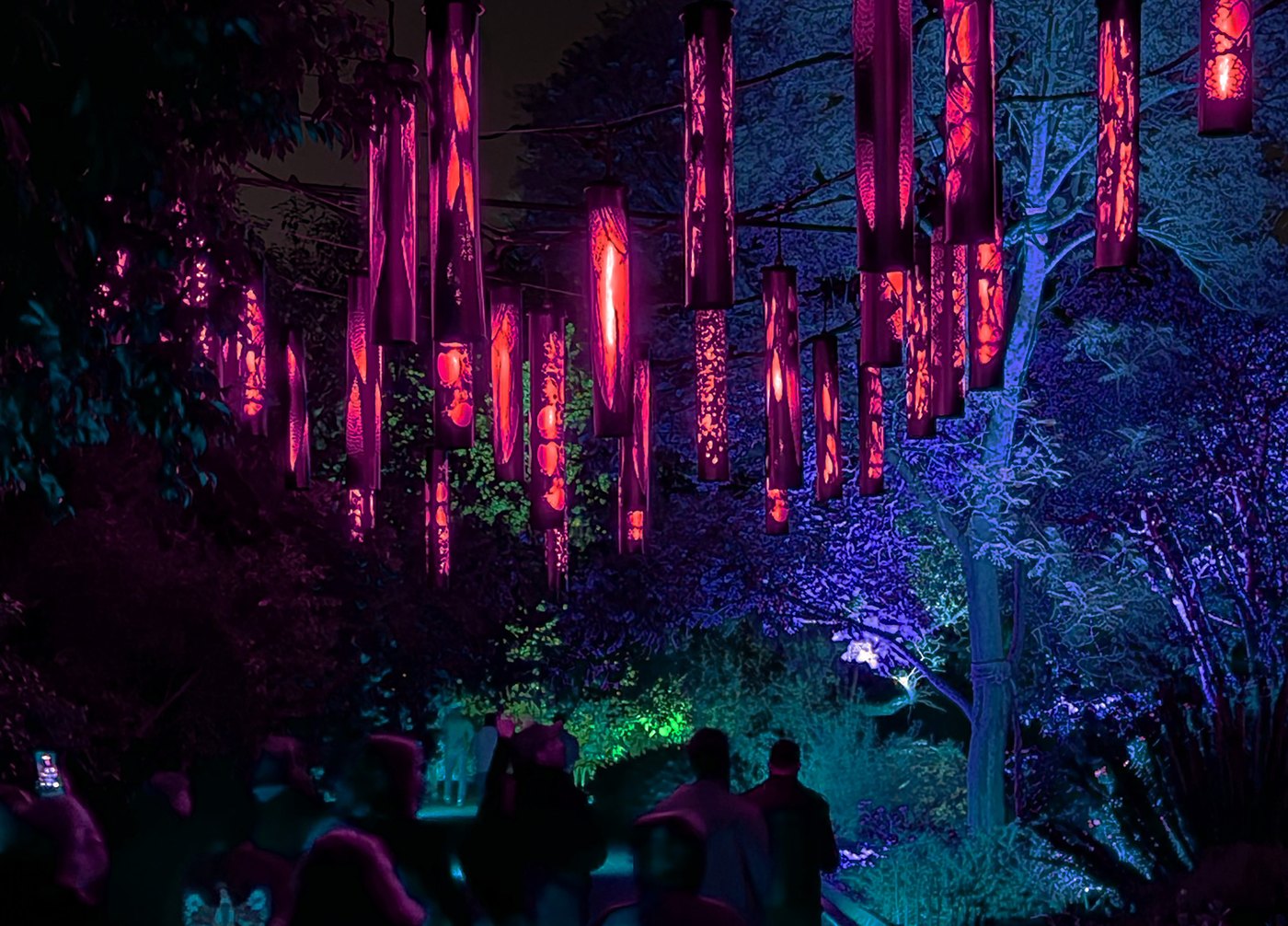
Commissioned by Culture Creative for Lightscape, WILDERNESS WITHIN combines microscope photography, recycled acrylic, addressable LEDs, electronics and an original soundscape built from field recordings gathered across significant global ecosystems.
It is scientific, sculptural, musical and emotional all at once: an artwork that asks audiences to step inside a world that is already alive, already complex, and usually hidden just beyond ordinary perception.
ENTTEC spoke with Betty about the field research behind the work, the role of sound and scale in her practice, and how ENTTEC lighting control helped transform microscope imagery into a living outdoor environment.
A Living Trail Of Light
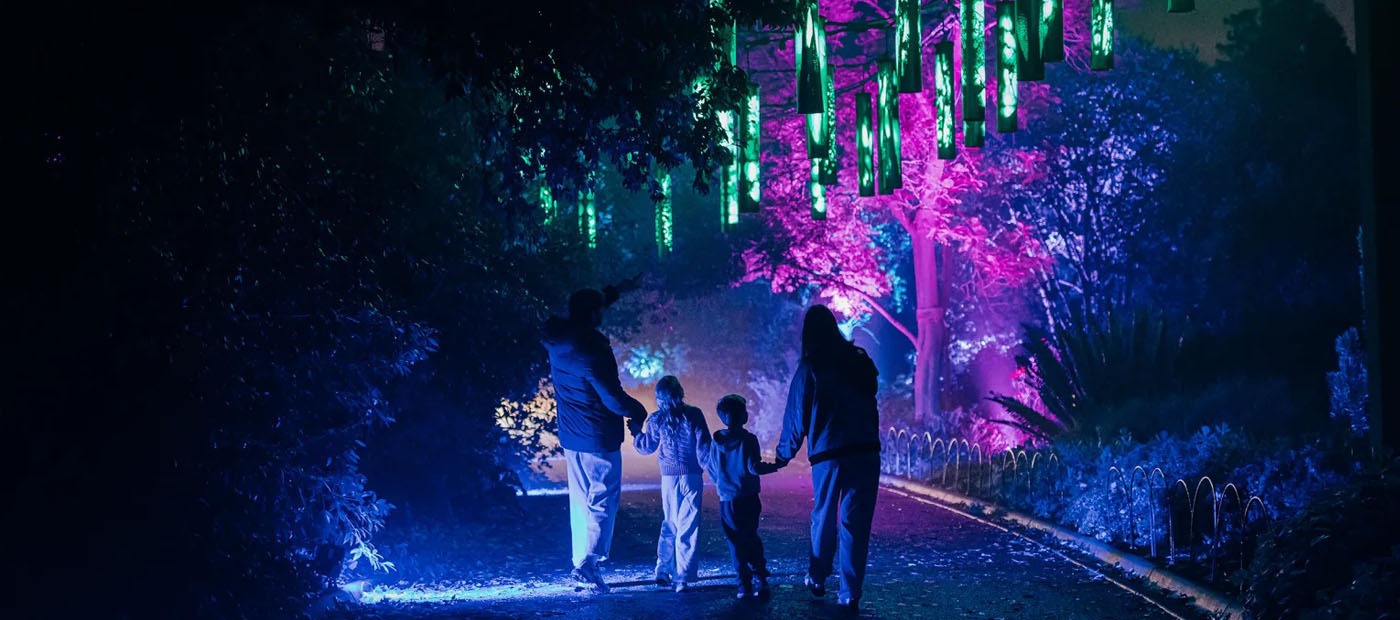
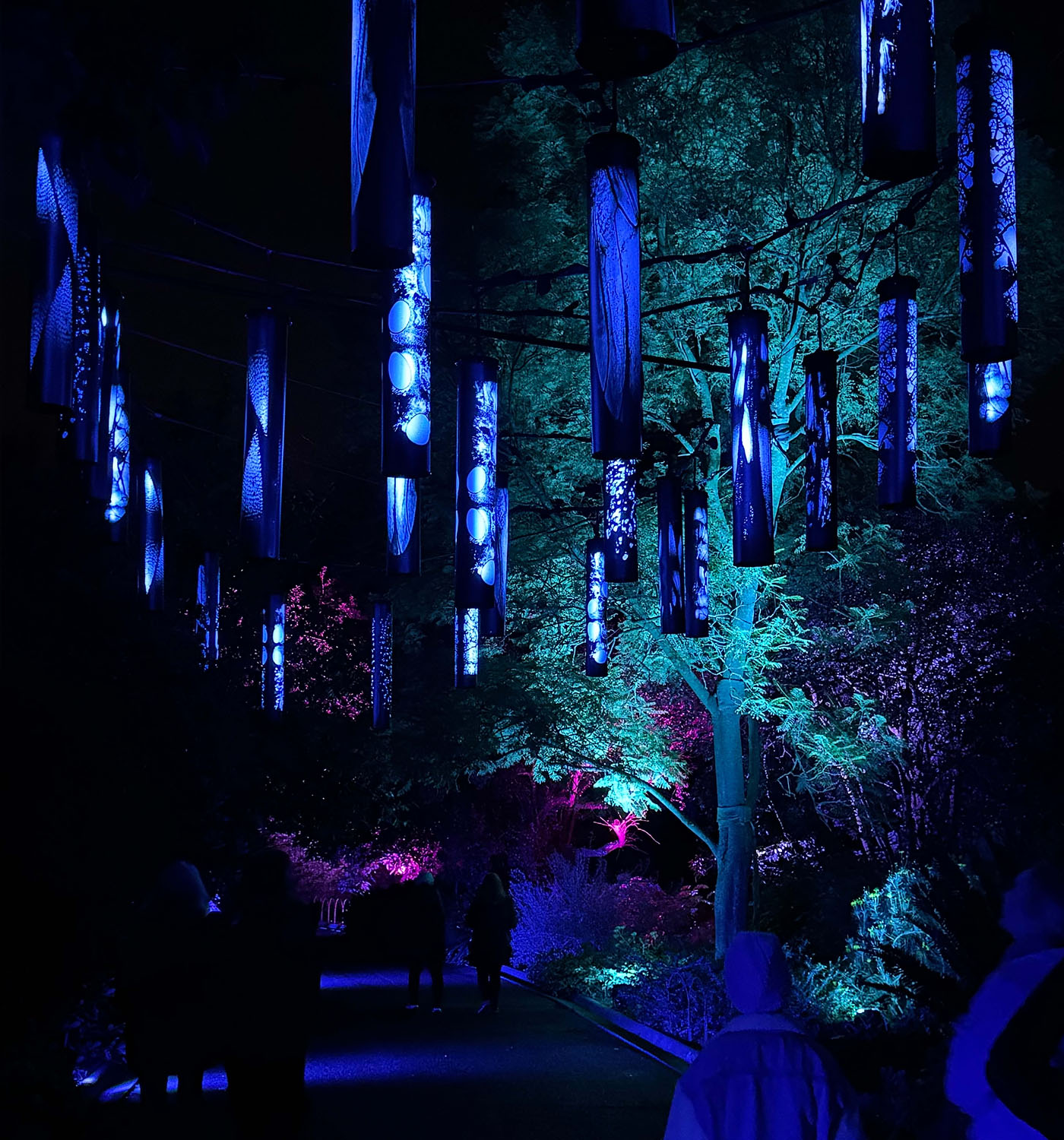
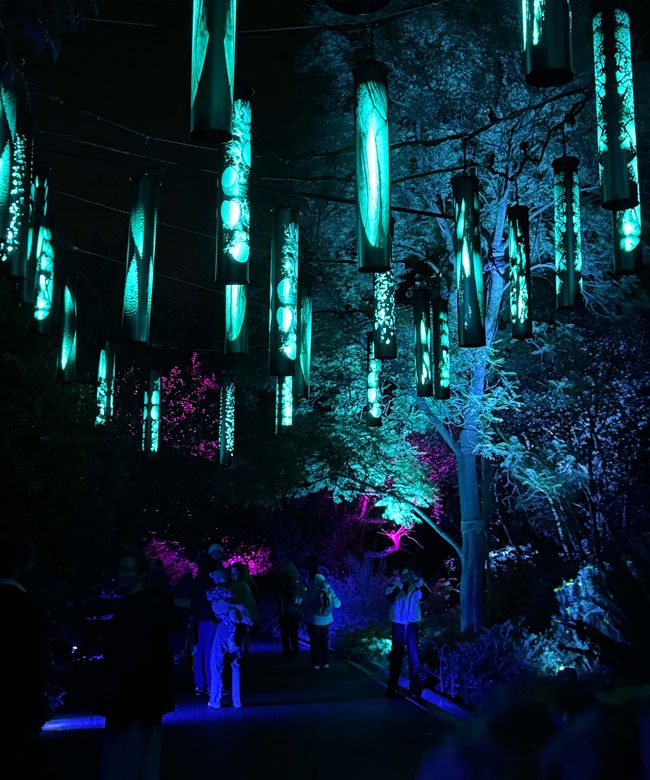
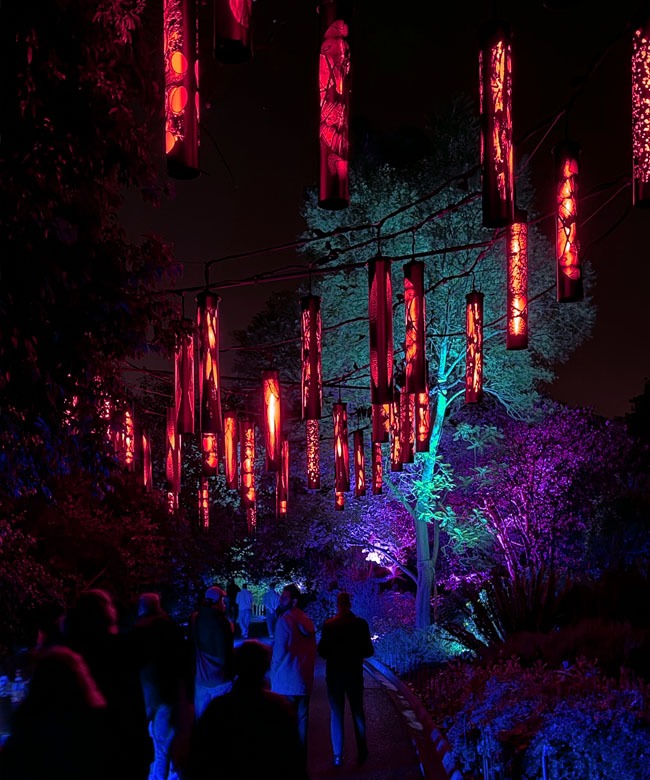
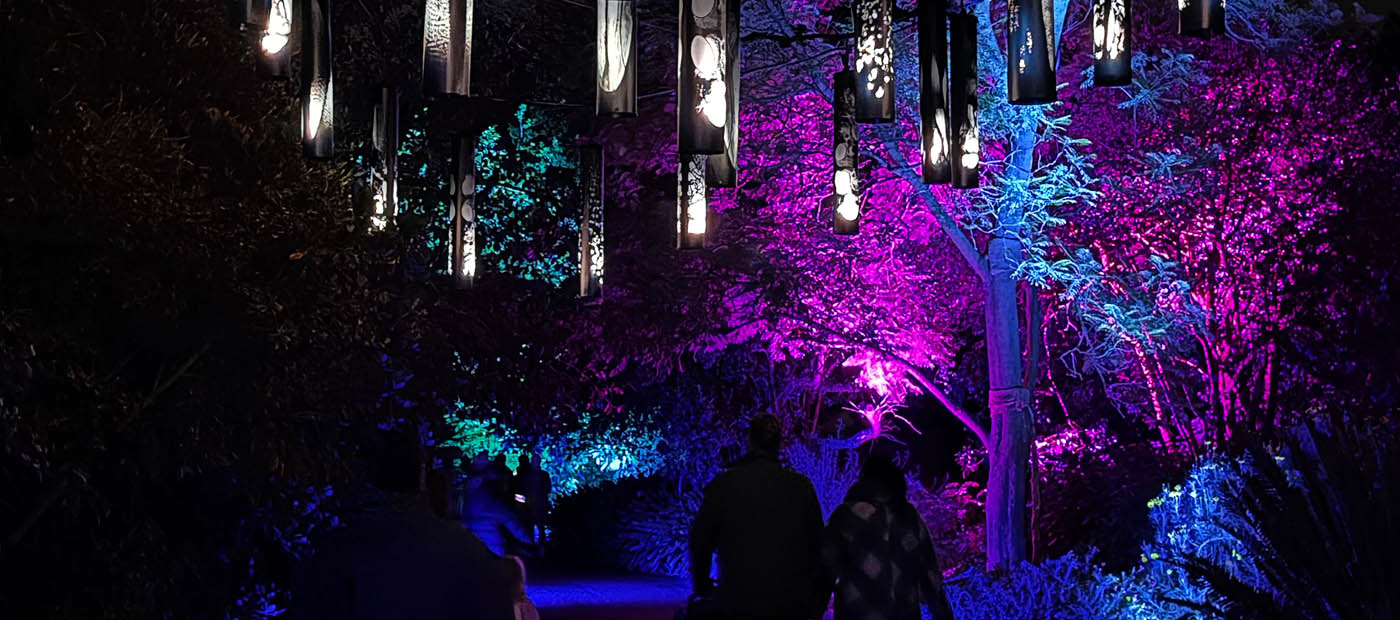
For visitors encountering WILDERNESS WITHIN at night, the first impression is one of immersion. Forty handmade lanterns hang through the gardens, each formed from recycled acrylic printed with Betty’s own microscope photography of the natural world. Inside every lantern are two runs of addressable LEDs, programmed so the installation appears to move as one connected organism.
ENTTEC: WILDERNESS WITHIN combines art, science, sound and light in a very distinctive way. How would you describe the project to somebody experiencing it for the first time?
Betty: WILDERNESS WITHIN is a trail of forty hanging lanterns, each one a recycled acrylic tube printed with my own microscope photography of the natural world. Inside every lantern sits two strips of addressable LEDs. The lights are programmed so the whole trail of lights appears to move together, designed so that the lanterns seem to exist as a single living, breathing entity.
Accompanying the light show is a soundscape built from field recordings gathered in the same wild places seen in the microscope imagery, fused with original electronic dance music I’ve composed. My goal is to make people feel as if they are in the centre of something alive and unique, transporting them to some of the world’s most significant ecosystems, revealing a hidden, microscopic world they’d otherwise never see.
That word “alive” is important. WILDERNESS WITHIN is not a static sculpture with lights added afterwards. The artwork is designed as an environment: one that moves, breathes, glows and surrounds its audience.
The Movement Matters
The imagery inside the lanterns originates from Betty’s microscope research in ecosystems around the world, including the Amazon, Panama, Taiwan, India, New Zealand, Egypt, Pakistan and Australia. Biological structures from these places have been enlarged and printed directly onto the recycled acrylic that encases the lanterns.
Looking At Nature Differently
ENTTEC: What first drew you to exploring the microscopic side of nature?
Betty: I’ve always loved spending time in wilderness, and I’m endlessly curious about where science, technology and nature meet. I’m always chasing experiences that take me into new natural environments and let me see them in a different way.
When I started working with microscopes, I was in awe of how they reveal layers of the world that are normally hidden from us. Suddenly I could see my surroundings in a way that had never been visible before. Once I started applying this working methodology within some of the world’s most significant ecosystems, it uncovered visual outcomes I could never have predicted. I discovered genuinely unexpected beautiful new aesthetic patterning.
Betty photographed microscopic elements from these ecosystems, enlarged the imagery and printed it directly onto the recycled acrylic that encases the lanterns. The work moves from micro to macro, from hidden cellular detail to a suspended public artwork that audiences can walk beneath.
Fieldwork, Patience And Presence
WILDERNESS WITHIN carries the trace of long, difficult, attentive fieldwork. Betty’s research trips have taken her to places including the Ganges in Varanasi, Wulai in Taiwan, the Sahara in Egypt and the deserts of Pakistan. But over time, the work became less about simply reaching extraordinary places and more about learning how to be present inside them.
ENTTEC: Were there any moments during that research that particularly changed the way you think about the natural world?
Betty: When I first started making work in wilderness, I was mostly focused on the logistics of getting into a location and back out again, rather than really being present within it. That shifted over years of fieldwork, through experiences like the LabVerde artist immersion program in the Amazon and the DINACON Digital Naturalism Lab in Panama, and later research trips to the Ganges in Varanasi, Wulai in Taiwan, the Sahara in Egypt and the deserts of Pakistan.
It takes time to be really present in these often difficult environments and it always works best if I try to almost dissolve myself into these locations, melding with my surroundings with a softness that makes me feel almost invisible.
Getting a genuinely clean field recording is one of the hardest parts of this work, because engine noise from boats or cars carries an enormous distance. To find somewhere with no trace of it at all, I’d often be up at two or three in the morning, walking for hours through the night to reach somewhere remote enough.
I will start out from somewhere already remote, such as a boat moored on a tributary deep in the Amazon jungle, then walk into the jungle in the deep night, set up my equipment, and sit absolutely still in absolute silence. After about 45 minutes the animals around me start feeling more comfortable with my presence and they begin making noise again and I record this, often capturing fabulous audio over the slow break of dawn.
The more I do this work, the more I understand that being fully present in these locations, rather than operating as someone quickly passing through, is one of the most important parts of actually connecting with place, and consequently it builds a deeper synergy between myself and the material I end up working with.
From Microscopic To Monumental
ENTTEC: What interests you about moving between the microscopic and the monumental?
Betty: I’ve always loved playing with scale. A microscope lets you take something from micro to macro, and that shift is what excites me. It plays with our expectations. As humans, we tend to feel like we operate at a “large” scale, because that’s the frame we’re used to.
Making artwork that’s larger than human scale flips that around, and I think it helps audiences feel their place within something bigger. It can help us feel a sense of awe. Connecting us, making us part of one organic, interconnected system, not separate from it. If we lose sight of that, it doesn’t bode well for our future. Ultimately we need to be working with nature, not against it.
That is the quiet force of WILDERNESS WITHIN. Its beauty draws people in, but the deeper invitation is ecological: to feel that human life exists inside an immense living system, not outside it.
Sound As A Hidden Layer
Sound is just as important as the visual experience. Betty comes from a music background as much as a visual art one, and she sees composition, sculpture and lighting as parts of the same immersive system.
ENTTEC: How did you approach creating the audio component, and what role do the field recordings play within the installation?
Betty: I come from a music background as much as a visual art one, so writing electronic dance music sits right alongside the large-scale sculptural and lighting work in my practice. The field recordings do a lot of the grounding here: they include things like the internal sound of trees and hydrophone recordings from significant waterways, so audiences are hearing textures of these ecosystems that are usually just as hidden as the microscopic imagery is.
Being able to build that audio myself, alongside the visual, sculptural and technical lighting elements, lets me create something genuinely immersive, creating an environment that surrounds an audience rather than one that sits in front of them.
My hope is that my artwork operates as a trigger that creates a small shift in how someone sees and engages with the world they live in. Music is one of the most evocative tools we have as artists, one of the most effective ways to form immersive human connections.
Ten Years In The Making
The Lightscape version of WILDERNESS WITHIN may be new, but the ideas behind it have been developing for around ten years. Betty’s microscope imagery has taken many forms across that period, from wall-mounted light boxes to illuminated poles and tubes rising from the ground.
ENTTEC: These lanterns represent more than a decade of research and development. How has the project evolved from its earliest ideas to the version visitors see today at Lightscape Melbourne?
Betty: About ten years of research and development sit behind these lanterns, and this artwork might be the last one I make in this particular series of works. Over the last 10 years my microscope imagery has taken a lot of different forms. Early on, the images were printed onto recycled acrylic and lit from behind as wall-mounted light boxes, or shown flat as two-dimensional works. Later versions stood as illuminated poles or tubes rising from the ground.
WILDERNESS WITHIN, at Lightscape, is the first time I’ve translated this whole body of research into hanging lanterns, so in a lot of ways, it feels like the culmination of everything I’ve learned across that decade.
The physical artwork measures approximately 1.4 metres high, 4 metres wide and 15 metres deep, with a two-minute programmed sequence that loops throughout the evening.
The Lighting System Behind WILDERNESS WITHIN
The technical challenge was to make a large number of LEDs feel organic, cohesive and reliable in an outdoor public-art setting. The technology had to do its job without drawing attention to itself.
ENTTEC: For the technically curious readers among our audience, could you tell us a little about the lighting system behind WILDERNESS WITHIN?
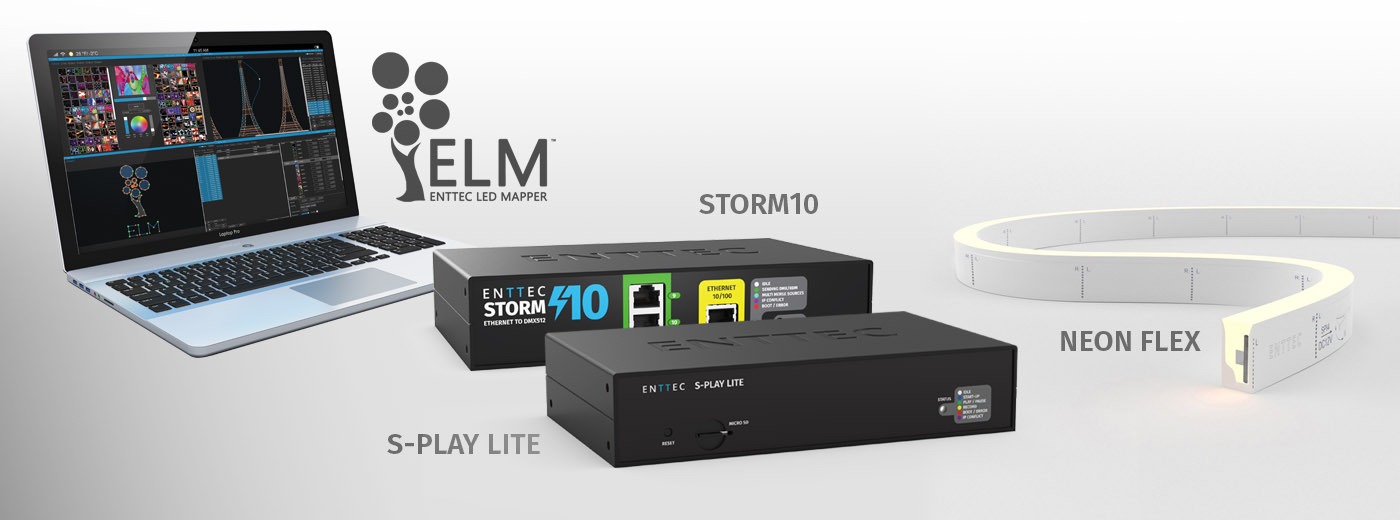
Betty: This installation is made up of 80 x 1m lengths of custom ENTTEC RGBW Neon Flex, a weatherproof silicone strip of dot-free LEDs. I selected the S9 flex as it has a wide 120-degree beam. There are 70 LEDs per metre so the whole installation has 5,600 LEDs. I selected the cool white 5000K variety of flex so that it would have the maximum effect in the outdoor environment I was creating it for.
The installation runs across 10 universes. It has eight clusters of five lanterns feeding into an ENTTEC STORM10. I designed the light show using ENTTEC’s ELM LED Mapper software and exported the show to an ENTTEC S-PLAY Lite, using its inbuilt software to program the schedule for the exact times that the show needs to be operational. This means the show runs automatically and it loops seamlessly, and I don’t need to leave a computer onsite. This can make the installation a lot more stable.
Even though I’ve used this kind of ENTTEC hardware setup many times before, and it’s never failed me, it was the first time I used ENTTEC’s ELM LED Mapper software. It is fantastic, a brilliant way to take what’s essentially a huge number of individual pixels and pull them together in a manageable, easy-to-use system.
I have previously used TouchDesigner, but one of the best outcomes of this project is discovering ELM, and I expect I’ll use it for all my DMX and LED projects from here on.
• 40 lanterns
• 80 x 1m lengths of custom ENTTEC RGBW S9 Neon Flex
• 5,600 LEDs
• 10 universes
• ENTTEC STORM10
• ENTTEC ELM
• ENTTEC S-PLAY Lite
Why ENTTEC?
Betty has worked with ENTTEC since around 2015, collaborating with several members of the team across different projects. For WILDERNESS WITHIN, she worked closely with ENTTEC’s Lachlan Hicks on the technical design and supply.
ENTTEC: Large-scale public artworks rarely come together without plenty of collaboration and problem-solving. What made you choose ENTTEC for the installation, and what was your experience working with Lachlan and the team?
Betty: I’ve been working with ENTTEC since around 2015, collaborating with a number of people on your team over that time, and it’s always been a great experience. Working with Lachlan Hicks on this project was no exception. It’s a bit of a complex build, and I felt like he had my back throughout it.
The best digital artwork makes the technology appear to be invisible. Audiences should see the impact, not the LEDs or the hardware that creates it. Getting to that point takes a lot of technical know-how, and while I bring some of that myself, having ENTTEC’s support is crucial for me.
Collaborating with your team on the technical design for WILDERNESS WITHIN was essential. I’m familiar with a lot of your gear and I know it’s super robust and stable, but people like Lachlan have a much more nuanced knowledge of it than I do.
Betty: What keeps bringing me back to ENTTEC is the human side of the company, the way they support me as an independent artist, working alongside me to help bring my projects to life. I don’t always use LEDs in my installations, but when I do, I’m working with ENTTEC. They’re a genuine fab long-term partner.
For ENTTEC, those are the kinds of collaborations that make lighting technology exciting: not simply as equipment, but as a creative tool that helps artists build experiences people can step inside.
Technology, Nature And Connection
Much of Betty’s practice explores the relationship between technology and nature. In WILDERNESS WITHIN, those worlds are not treated as opposites. Microscopes, hydrophones, LEDs, field recorders, recycled acrylic and programming software all become tools for paying closer attention.
ENTTEC: Do you see technology and nature as being in conflict, or can technology help us better understand and connect with the environment?
Betty: Technology itself is neutral. It’s never inherently damaging or destructive to nature. What matters is how humans design it and what they use it for. There are AI-controlled robots now clearing seafloors of invasive species; that’s technology actively helping biodiversity recover. Then there’s technology like data centres, where the sheer energy demand creates real complexity, and potential harm, for both the environment and human culture.
I’m not anti-tech, far from it. I love artificial intelligence and I work with emerging technologies all the time. But I stay conscious of the intention behind any given piece of tech, including my own designs. Through my artwork, I create and use technology that genuinely helps us, as humans, form closer connections with ourselves, with each other, and with the world around us.
What Comes Next
WILDERNESS WITHIN is on show at Lightscape 2026, Royal Botanic Gardens Melbourne, until August 2. Betty is already speaking with organisations about future presentations of the work locally, nationally and internationally.
The current commission includes 40 lanterns. The dream version is bigger.
ENTTEC: Looking ahead, where would you like to take WILDERNESS WITHIN next?
Betty: As I mentioned, this might be my final series in this body of microscope installation work, but I don’t think it’s the final iteration of this particular piece. I’ve always imagined WILDERNESS WITHIN to be a 100-lantern installation. The current exhibition of it at Lightscape in the Royal Melbourne Botanic Gardens over winter 2026 was the first commission for the work, and they asked for forty lanterns. But I’d love to eventually see the full 100-lantern version realised.
Regardless of the exact number, I’m keen to keep touring WILDERNESS WITHIN beyond the current Lightscape season, and I’m already talking to different organisations about how it could travel locally, nationally and internationally. It’s been interesting having it in a natural setting like the Botanic Gardens for this iteration, but I think it has real potential in all sorts of environments, indoors and outdoors alike. I’m excited to see what other forms this work takes.
Wherever the work travels next, its core invitation remains the same: to step inside a hidden wilderness and feel, even briefly, part of something living.
EXPLORE:
bettysargeant.com/immersive-lanterns
instagram.com/bettysargeant
ENTTEC ELM
ENTTEC S-PLAY Lite
ENTTEC STORM10
Credits:
Dr Betty Sargeant: artist, concept, technical lead, designer, composer, lantern construction, technical construction and LED programming.
Culture Creative: producers.
Royal Botanic Gardens Melbourne: partners.
Lightscape Melbourne: event host.
ENTTEC: LED supply and lighting control support.